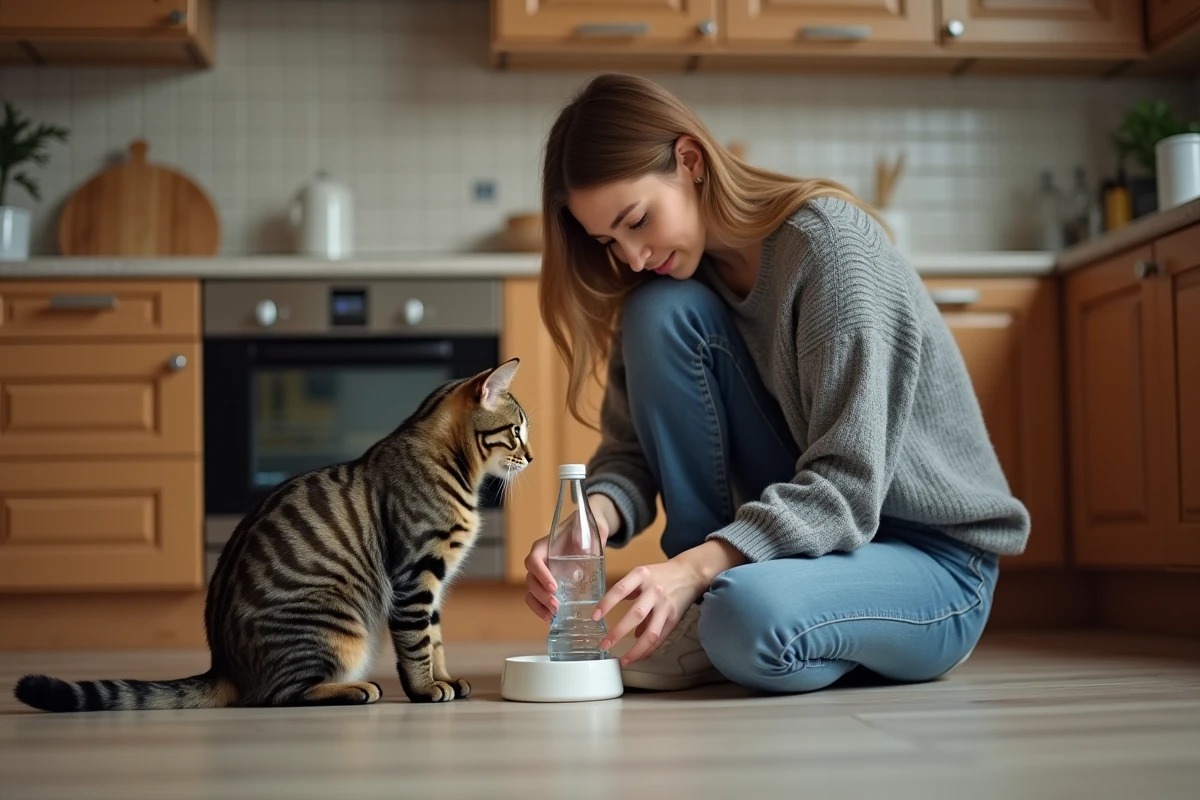
We rarely question the composition of the water that fills the cat’s bowl. Yet, behind every sip, the choice of source is not trivial, especially when considering mineral water, like Evian, which is often poured thoughtlessly, but not always without consequence.
Veterinarians’ warnings are increasing about the dangers of excessive mineral intake for felines, particularly for those already prone to urinary issues. Between tap water, filtered pitchers, and bottled waters, just one detail in the composition can change everything: how to decide, without error, on the best option to preserve the vitality of our companions?
Water and Your Pet’s Health: Why the Type of Water Matters
Water never makes headlines, yet each bowl weighs in the balance of the cat’s health. We tend to forget that it derives its sobriety from its desert roots, making it particularly sensitive to insufficient hydration with a dry diet.
Hydrating means pampering the kidneys, supporting waste filtration, and reducing the risk of urinary stones. The nature of the water then takes on a new dimension: minerals, taste, varying contents, everything counts. Some cats do not tolerate excess calcium or magnesium well: it becomes prudent to monitor the amount of water consumed, vary the sources, and especially prioritize light water that does not burden the renal system.
In practice, to encourage the cat to hydrate, nothing replaces a few simple gestures:
- Increase the number of water points in the house.
- Offer a choice between different bowls or fountains, sometimes scattered in various locations.
- Observe and adapt the placement or style of the container according to the animal’s preferences.
Adapting access to water according to the age, diet, and specific needs of the cat remains a solid foundation to meet its natural needs.
Can You Give Evian Water to Your Cat or Dog Without Risk?
The question keeps coming back: is Evian water, which many human households consume daily, a wise or risky choice for animals? From a technical standpoint, Evian is distinguished by reasonable mineralization, far from the excesses of many other bottled waters. No additives, and limited concentrations of calcium or magnesium: on paper, the balance seems respected.
However, each animal has its own sensitivity. If a cat has urinary problems or an older dog, vigilance is required. The excess of minerals must be monitored to avoid unintentionally weakening renal function in the long term. In most situations, giving Evian water to your cat is therefore, after consulting a veterinarian, among the suitable choices for daily hydration, provided you monitor the animal’s reaction and offer clean, fresh water every day.
To minimize any risk and establish good habits, a few gestures are essential:
- Change the water daily to avoid stagnation.
- Avoid waters rich in sodium or dry residues, to protect the kidneys of sensitive cats and dogs.
- Provide multiple strategically placed water points so that the animal can drink whenever it feels the need.
The choice of appropriate water subtly influences urinary balance and the overall health of our companions. Evian does not trigger recurring adverse effects, as long as the owner remains attentive to the animal’s reaction and regularly renews the water.
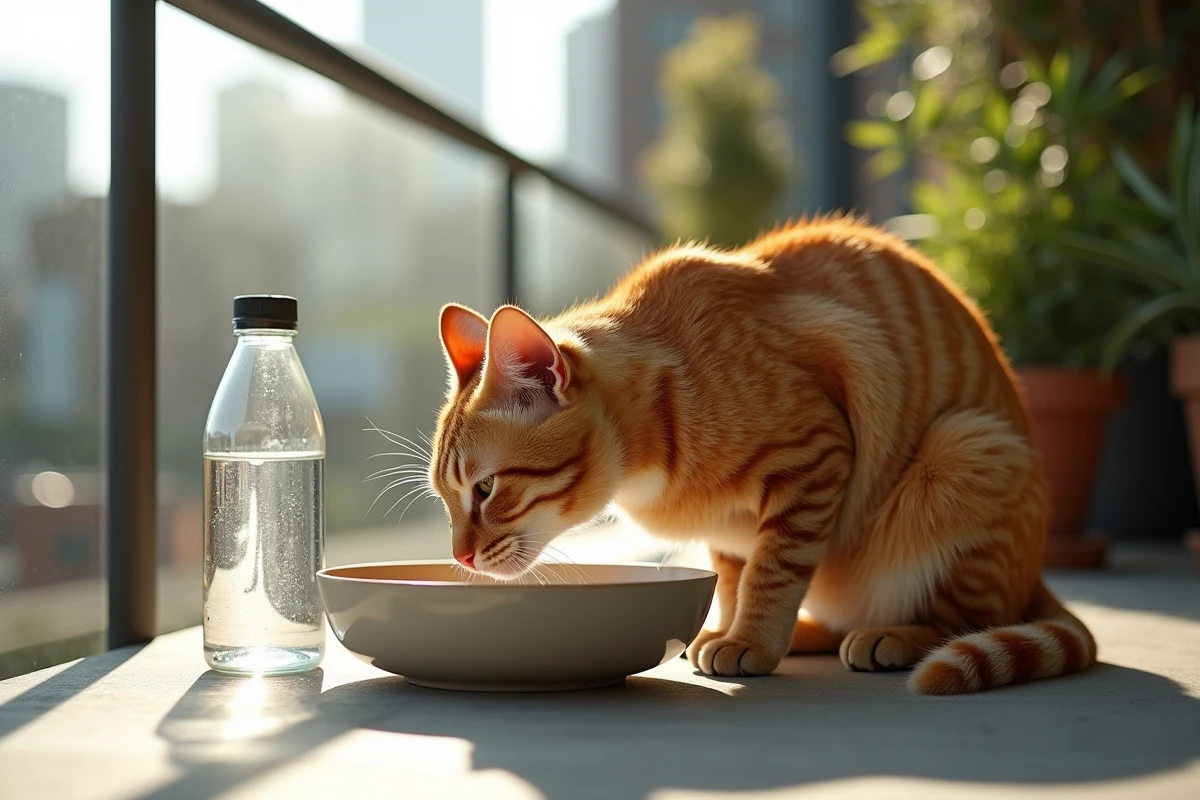
Making the Right Choice Between Tap Water, Filtered Water, and Bottled Water for Your Companion
Between tap water, filtered water, and bottled water, it can be hard to see clearly. Tap water, monitored by public authorities, remains the common reflex. But depending on the region, the presence of limestone, chlorine, or other traces sometimes alters its taste. Cats are particularly reactive: water that smells like disinfectant, and they will turn their nose up at the bowl without warning.
Filtered water is gaining ground, appealing to those looking to eliminate impurities, residues, and possible traces of treatment. A well-maintained filter reduces the load of undesirable minerals while reassuring about the taste quality of the water. A crucial point: a neglected filter becomes public enemy number one due to the proliferation of bacteria.
As for bottled water, Evian stands out for its consistency and the lightness of its composition. Low in sodium, stable over time, it is suitable for daily use, provided it is changed every day and stored away from light to preserve its freshness. To ease the workload on the kidneys, prioritizing low-mineral water, suited to the specific needs of the cat or dog, remains the wisest choice.
Get into the habit of keeping a few clear rules in mind for choosing and maintaining water points:
- Clean and frequently renew the water in each bowl to limit bacteria and pollutants.
- Choose the solution that the animal prefers, testing different options gradually.
- Observe any changes, even subtle, in drinking frequency or behavior; this can sometimes be an early signal not to be overlooked.
Ultimately, choosing the best water for your cat or dog requires as much attention as common sense. An apparently trivial gesture, yet, this is where the silent balance of a long and trouble-free life begins. In the clarity of a clean bowl, everything is at stake.