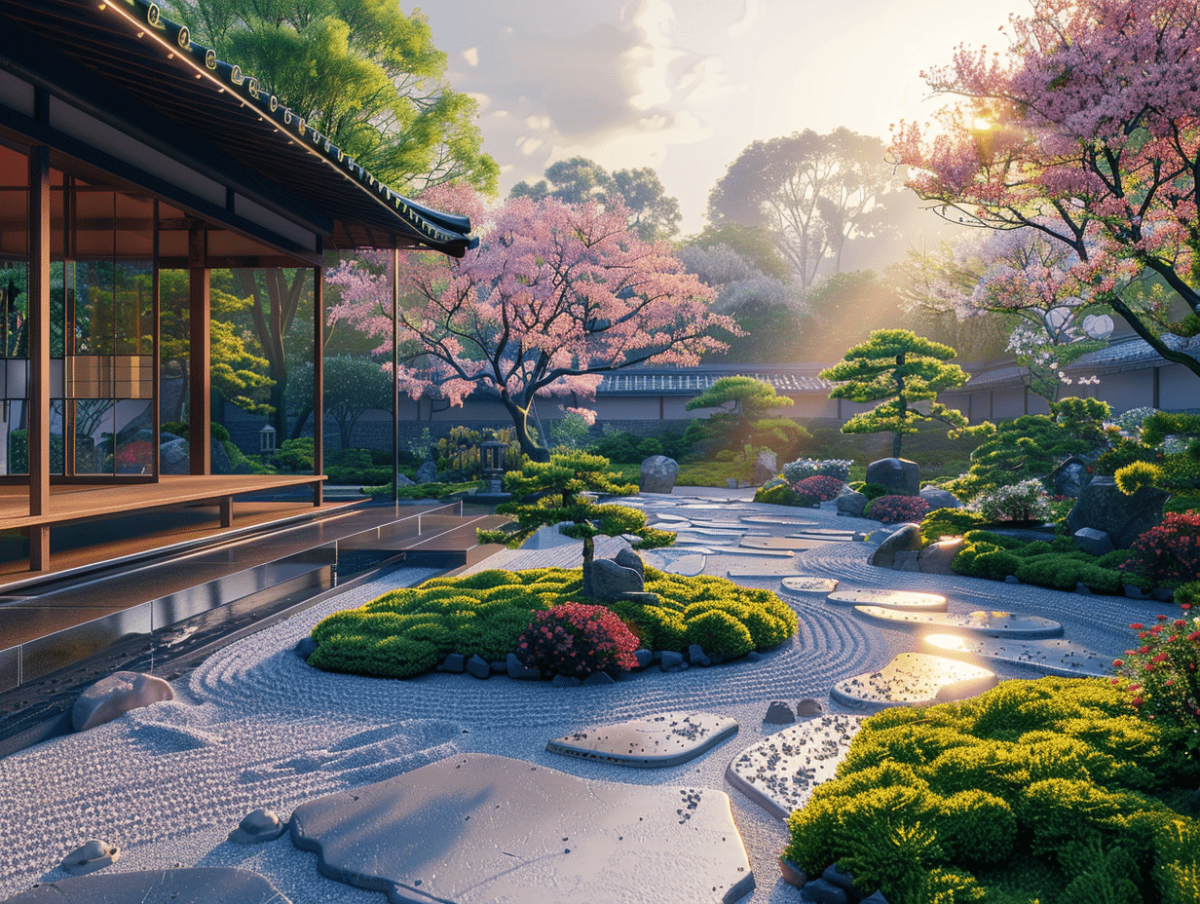
Japanese gardens, oases of serenity, are renowned for their ability to reflect natural beauty through meticulous composition. These green spaces, where tradition intertwines with aesthetics, celebrate Japan’s botanical diversity. The flora of these gardens is the result of rigorous selection, where each plant has its purpose, contributing to a plant scenography that evolves with the seasons. From Japanese maples to lush mosses, cherry blossoms, and colorful azaleas, the botanical richness of Japan’s gardens offers a fascinating spectacle for nature lovers.
The Secrets of Botanical Diversity in Japanese Gardens
Diving into the Heart of Plant Harmony, Japanese gardens embody a philosophy where nature and humanity aspire to peaceful coexistence. At the Dominique Villars botanical garden, located at the University of Grenoble Alpes, this aspiration takes root in French soil, where a Japanese garden of medicinal plants reveals the close ties between plants and traditional Japanese medicine, known as Kampo. The botanical variety selected for this garden highlights the therapeutic use of each species, thus offering a panorama of medicinal plant diversity.
The conservation of medicinal botanical species is a key ecological challenge. This Japanese garden not only perpetuates the aesthetics and serenity of traditional Japanese gardens; it also brings together species for their preservation. The academic collaboration with Yokohama University of Pharmacy transcends borders, creating a bridge between culture, science, and conservation.
The Japanese shrub, an emblematic element of Japanese gardens, finds its place among medicinal plants. It serves not only as an ornament but also as a component in various Kampo remedies. This garden is particularly unique as its purpose extends beyond mere aesthetics; it is part of a cultural and scientific mediation initiative. It becomes an educational tool and a space for raising awareness about the richness of the Japanese natural pharmacopoeia.
The role of the Japanese garden in the dissemination of culture and science is undeniable. It serves as a space for mediation and education, where visitors can immerse themselves in an ecosystem that is not only botanical but also historical and therapeutic. The meeting between the centuries-old tradition of Japanese gardens and contemporary practices of Kampo medicine reflects a successful integration of natural therapies in a globalized context, where local and international intertwine to enrich our understanding of the living world.
The Emblematic Plants of Japanese Gardens and Their Symbolism
In any design of a Japanese garden, plants are not chosen at random; they embody a refined symbolism essential to understanding Japanese culture. Manon Paul-Traversaz, the garden designer, in collaboration with Michel Sève and Serge Krivobok, has meticulously selected plants that tell a story, teach a moral, or embody a philosophy. The presence of each species in the Japanese garden at the University of Grenoble Alpes is a tribute to this tradition, where the pine symbolizes longevity, bamboo resilience, and the plum tree rebirth.
Simon Paul and Pauline Durrenbach, who closely collaborated on the realization of this garden, ensured that the floral composition reflects the essence of ethnopharmacology, a discipline that studies the use of plants in traditional cultures for their medicinal properties. The journal ‘Ethnopharmacologia’ has even published works on Kampo medicine, attesting to the scientific interest in Japanese botanical expertise and its relevance in contemporary medical fields.
The partnership with the horticultural high school of Saint-Ismier has materialized this horticultural collaboration, where students have engaged in a concrete project, blending technical learning with the discovery of foreign cultural practices. This joint implementation strengthens the ties between education and conservation, highlighting the pivotal role of educational institutions in the transmission of knowledge and respect for biodiversity.
The collaboration with the Yokohama University of Pharmacy further enriches the scope of this garden. It ensures a transfer of knowledge and scientific validation of the ancestral practices of Kampo medicine. The Japanese garden thus becomes a living laboratory where academic research intertwines with respect for traditions, revealing the importance of emblematic plants not only for their beauty but also for their invaluable contribution to health and well-being.