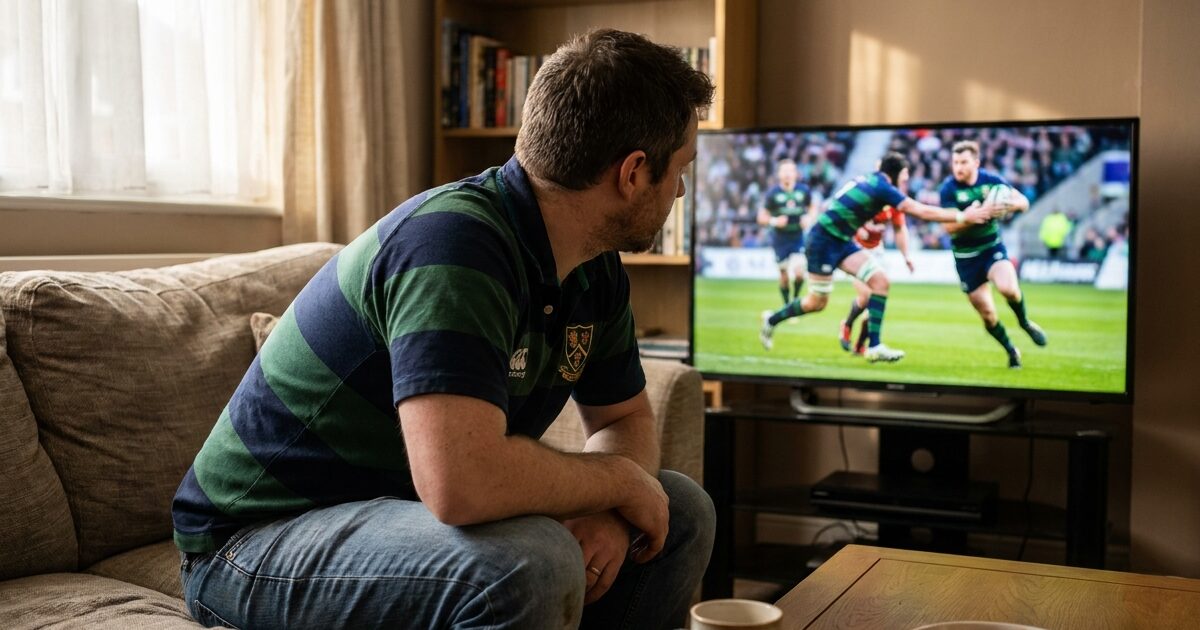
Two halves of forty minutes, a break in between, and the final whistle: on paper, a rugby union match lasts less than an hour and a half. In reality, the Sunday afternoon TV schedule occupies the couch for much longer. Understanding where this extra time goes allows for planning the rest of the day without unpleasant surprises.
Why the rugby clock always exceeds the 80-minute regulation
The rules provide for two periods of forty minutes. But one rule changes everything: the period does not stop at the buzzer. The game continues as long as the ball is not “dead,” meaning it is out of play or stopped after a foul. World Rugby specifies this in Law 5 of its laws of the game.
In practice, a tense end to a half, with several phases of play strung together near the try line, can add several minutes. Multiply this effect by two periods, and you get an effective playing time that regularly exceeds the displayed 80 minutes.
Additionally, there is the halftime itself. It generally lasts about ten minutes, sometimes longer during international matches or finals. Video consultations (TMO) also extend the match for every disputed try or contested yellow card. If you are looking to estimate the duration precisely according to the competitions, a practical guide by crampon canterbury details the differences between Top 14, Champions Cup, and international matches.
As a result: between the kickoff and the final whistle, expect often an hour forty to an hour fifty, not an hour twenty.
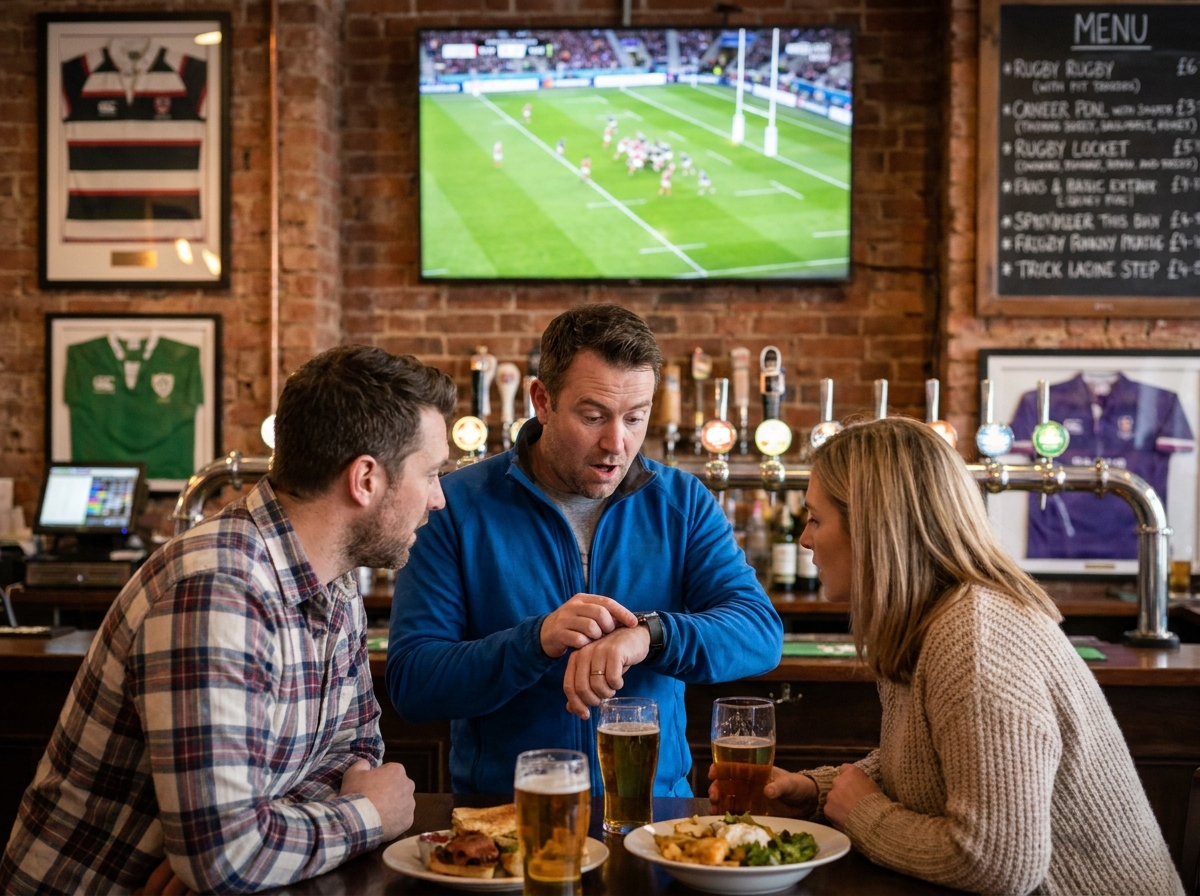
Sunday TV program duration: pre-match, debrief, and multiplex
You may have noticed that the time slot displayed in the program significantly exceeds the duration of the match? This is not an error. Broadcasters build a presentation around the match that significantly inflates the time slot.
What the slot broadcast on Canal+ or France 2 contains
An example taken from Canal+’s programming for a Top 14 multiplex shows a scheduled slot of over two hours. This block includes team presentations, tactical analyses from consultants, the match itself, and then the debrief with replays, interviews, and updated standings.
France 2, during the weekends of the Six Nations Tournament, offers a comparable setup. The program often starts thirty minutes before kickoff and extends twenty to thirty minutes after the final whistle.
- The pre-match (lineups, context, predictions) generally takes about fifteen to thirty minutes depending on the stakes.
- The match itself, with its stoppages and halftime, lasts about one hour forty to one hour fifty.
- The debrief (summary, press conference, analysis) adds another fifteen to twenty minutes.
In total, a Sunday afternoon rugby program averages two and a half hours, sometimes more when two matches follow on the same channel.
Knockout matches and extra time: the scenario to anticipate
In the regular phase of Top 14 or Pro D2, there is no extra time: the match ends at the regulation time, possibly in a draw. The calculation remains predictable.
The situation changes in the knockout phases. The rules of certain competitions provide for extra time if the teams are tied. Two additional periods are then added, sometimes followed by penalty shootouts if the score remains tied. This format can extend the match by about twenty minutes.
For a semi-final or final, plan for a slot of three hours including the pre-match and the debrief. Channels rarely shift the following program: they incorporate this margin into their schedule.
The special case of multi-match days
On some Sundays, the channel schedules two matches in the same afternoon, for example during the early rounds of the Champions Cup or during the Six Nations Tournament. The first match starts in early afternoon, the second in late evening.
If you plan to watch both, the TV marathon can exceed five hours. It’s better to know this before promising a family outing at 5 PM.
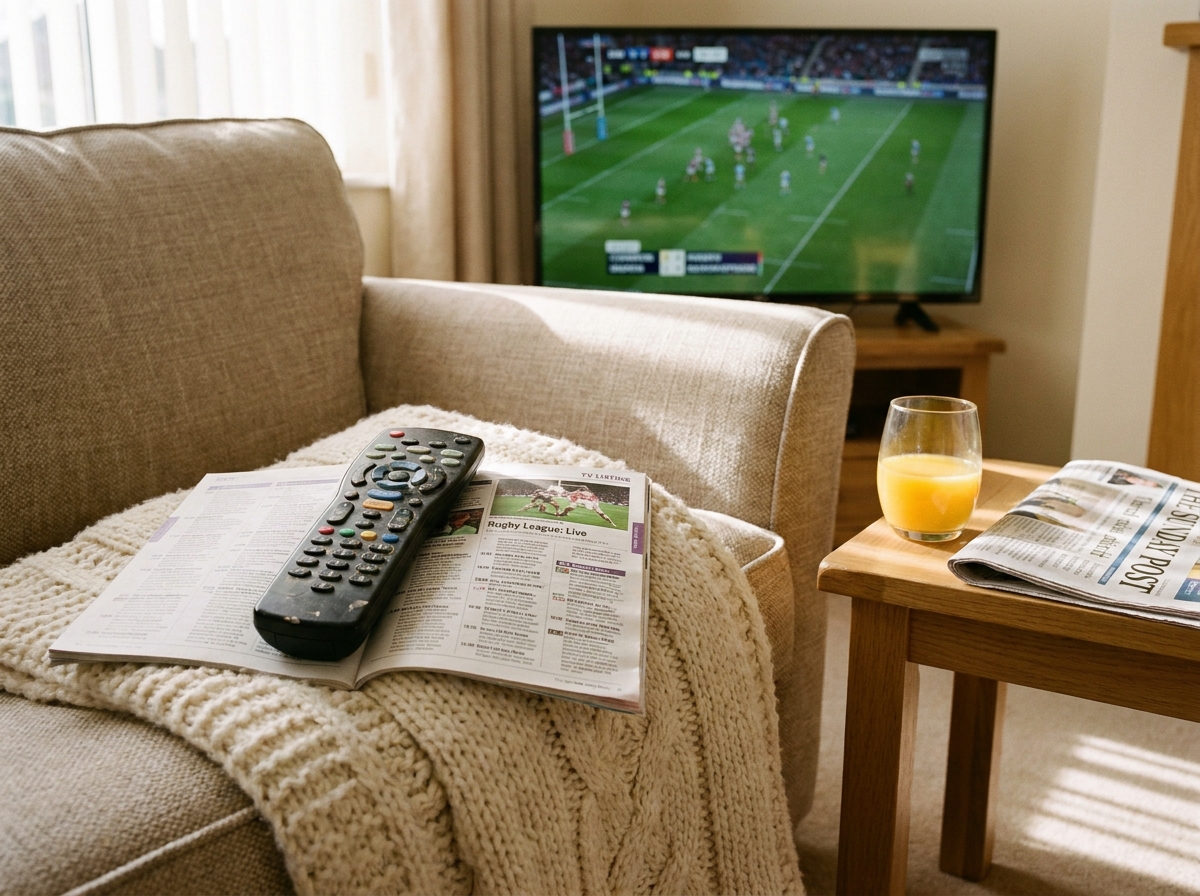
Planning your Sunday around rugby: concrete guidelines
Rather than sticking to a single number, adjust your estimate according to the type of match.
- Classic championship match (Top 14, Pro D2) broadcast in full: expect about two and a half hours from the start of the show to the end of the debrief.
- International match or knockout phase: three hours, including extra time.
- Two consecutive matches on the same channel: five hours if you stay from the first kickoff to the last replay.
- Replay or delayed summary: generally condensed into one hour to one and a half hours, without pre-match or debrief.
The classic Sunday afternoon slot in Top 14 often starts around 4 PM or 5 PM, pushing the end of the program towards 7 PM, or even later in the case of a multiplex. Checking the schedule the day before remains the most reliable reflex, as the times vary according to broadcasting rights and channel imperatives.
The gap between the 80 minutes of regulation and the actual time spent in front of the screen is due to three factors: stoppages that stretch each period, halftime, and the TV presentation that frames the match. Once these parameters are integrated, the Sunday afternoon can be planned smoothly, whether the match is played at Stade de France or on the other side of the southern hemisphere.