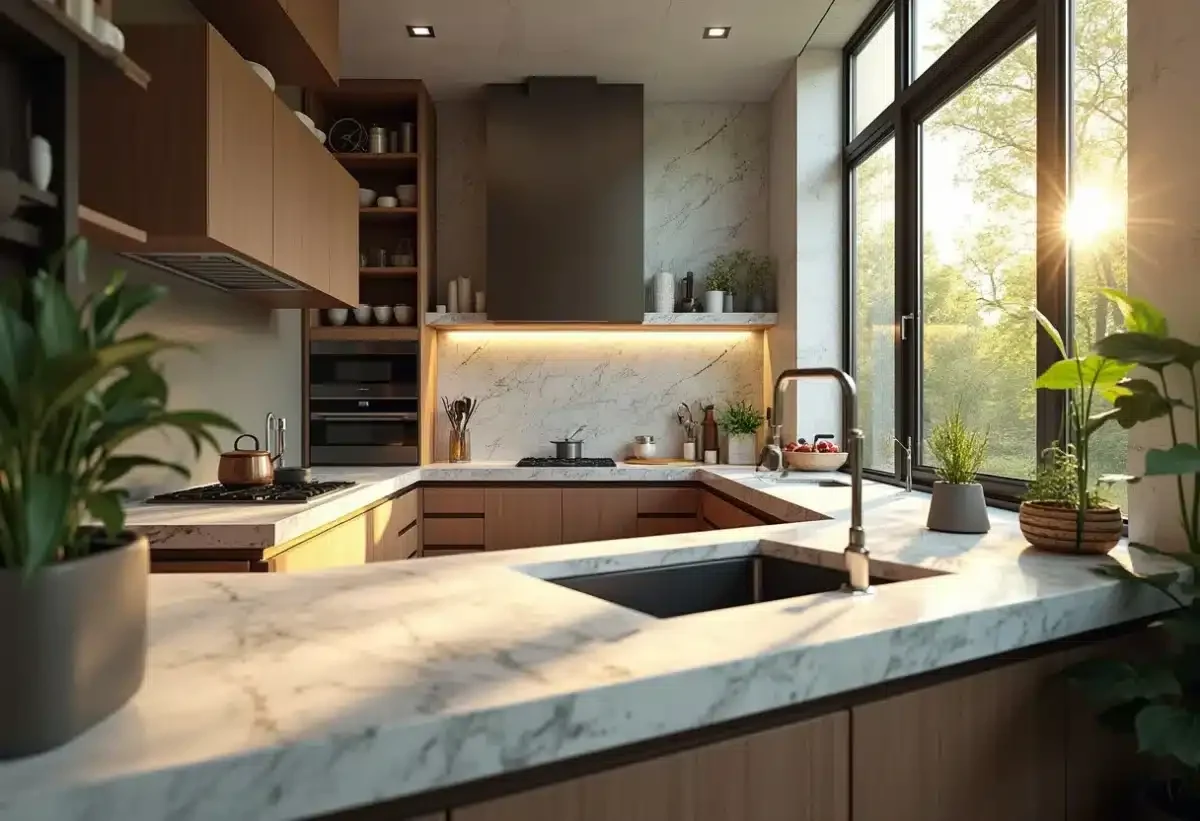
The kitchen is often the heart of the home, a space where conviviality and culinary creativity blend. The choice of countertop, the centerpiece of this environment, therefore deserves special attention. With a multitude of materials available, it can be difficult to make an informed choice.
From elegant and luxurious marble to robust and durable granite, not to mention easy-to-maintain quartz, each option has its own advantages and disadvantages. Aesthetic appeal, durability, and budget are essential criteria to consider in order to find the material that best suits your lifestyle and needs.
Essential criteria for choosing your countertop material
Durability and resistance
For daily use in the kitchen, the durability of the material is paramount. Granite, for example, stands out for its scratch resistance and high-temperature tolerance. Marble, while highly valued for its aesthetics, is more fragile against impacts and food acidity. Quartz, on the other hand, combines stain resistance and ease of maintenance, making it a versatile option.
Aesthetic and style
The perfect material for your countertop should also harmoniously integrate with your interior decor. Wood, with its warm appearance, adds a natural and friendly touch. Stainless steel, often used in professional kitchens, offers a modern and hygienic look. For a more contemporary appearance, polished concrete or ceramic can be wise choices.
Maintenance and practicality
Maintenance is a significant criterion. Laminate, highly sought after for its ease of maintenance and moisture resistance, represents an economical solution. Glass, while easy to clean, can be sensitive to thermal shocks. Wood requires regular maintenance to preserve its appearance, while resin offers a smooth and hygienic surface, ideal for culinary preparation.
- Laminate: Easy to maintain, moisture resistant
- Glass: Aesthetic, but sensitive to thermal shocks
- Wood: Warm, requires regular maintenance
- Stainless steel: Hygienic and heat resistant
- Marble: Aesthetic, but fragile
- Granite: Durable and scratch resistant
- Quartz: Stain resistant, easy to maintain
- Polished concrete: Sleek and durable
- Ceramic: Resistant to high temperatures, hygienic
- Resin: Heat resistant, easy to maintain
The advantages and disadvantages of popular materials
Laminate
- Advantages: Heat resistant up to 180°C, easy to maintain, moisture resistant.
- Disadvantages: Less durable than natural materials, may deteriorate over time.
Glass
- Advantages: Modern aesthetic, easy to clean.
- Disadvantages: Sensitive to thermal shocks, may crack.
Wood
- Advantages: Warm, adds a natural touch to the kitchen.
- Disadvantages: Requires regular maintenance, sensitive to stains and moisture.
Stainless steel
- Advantages: Hygienic, resistant to heat and acids.
- Disadvantages: Sensitive to scratches, requires frequent cleaning to avoid marks.
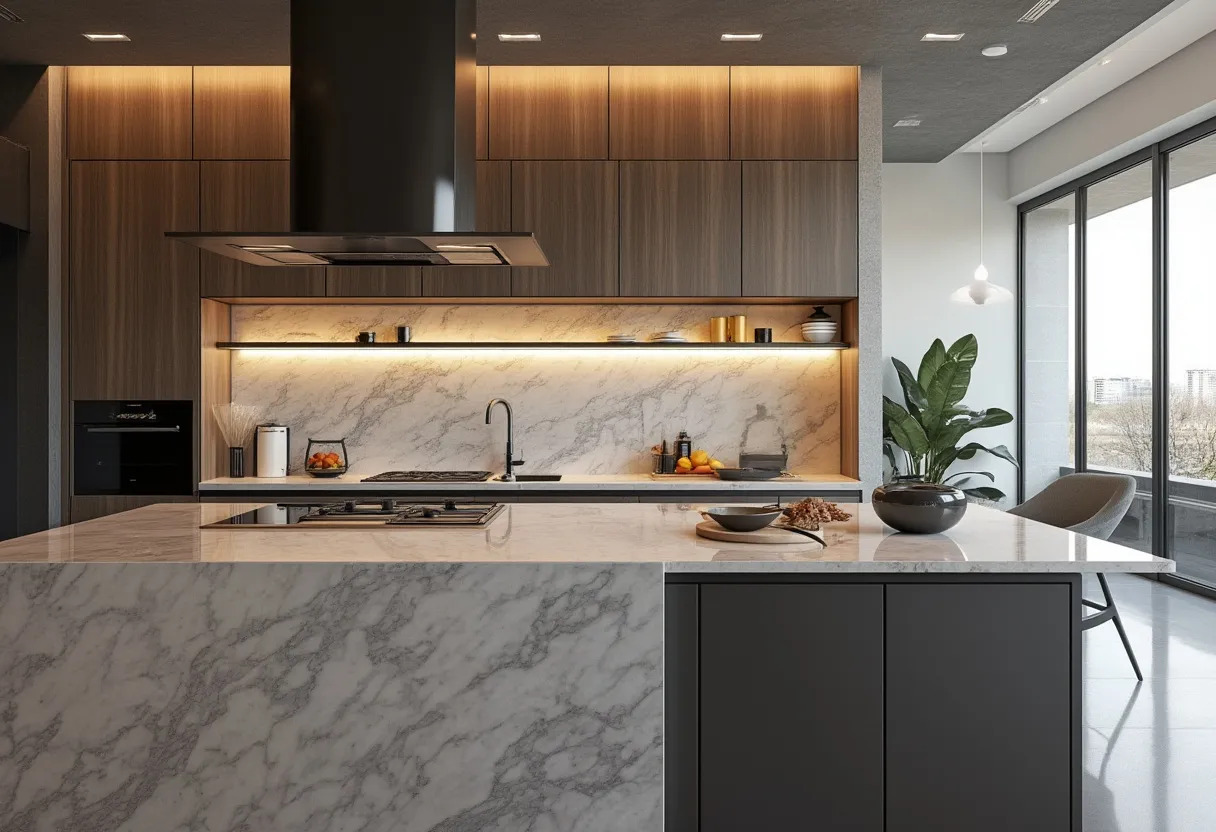
Marble
- Advantages: Aesthetic and luxurious.
- Disadvantages: Fragile, sensitive to food acidity, cleaning products, and heat.
Granite
- Advantages: Durable, resistant to high temperatures, scratches, and impacts.
- Disadvantages: High cost, complex installation.
Quartz
- Advantages: Stain resistant, easy to maintain, wide range of colors.
- Disadvantages: Less heat resistant than granite, high cost.
Polished concrete
- Advantages: Sleek, durable, customizable with pigments.
- Disadvantages: May crack, requires a resin application to increase its resistance.
Ceramic
- Advantages: Resistant to high temperatures, hygienic.
- Disadvantages: May crack or break under strong impact.
Resin
- Advantages: Heat resistant, easy to maintain, suitable for food contact.
- Disadvantages: Less scratch resistant, may yellow over time.
Practical tips for an informed choice
Assess your needs and lifestyle
Raphaël Bouchemousse, director of the ID-wad agency, recommends carefully assessing your needs before choosing your countertop material. If you cook often, prioritize materials like granite or quartz, which are scratch resistant and high-temperature tolerant.
Consider aesthetics and maintenance
Delphine Fuchs, director of the S’KISS agency, emphasizes the importance of aesthetics. Wood adds a warm touch, while stainless steel offers an industrial look and is easy to clean. Wood requires regular maintenance to avoid stains.
Weigh the cost/benefit ratio
Bertrand Folmard, partner at Bonjour les architectes agency, stresses the cost/benefit ratio. Laminate countertops are economical and durable, but less so than those made of natural stone like marble or granite. Synthetic resin offers a good compromise for those looking for an easy-to-maintain surface without sacrificing aesthetics.
- Wood: Warm, but requires regular maintenance.
- Stainless steel: Hygienic and durable, but sensitive to scratches.
- Ceramic: Resistant to high temperatures, but may crack.
Find the material that suits your daily uses and the atmosphere you wish to create in your kitchen.