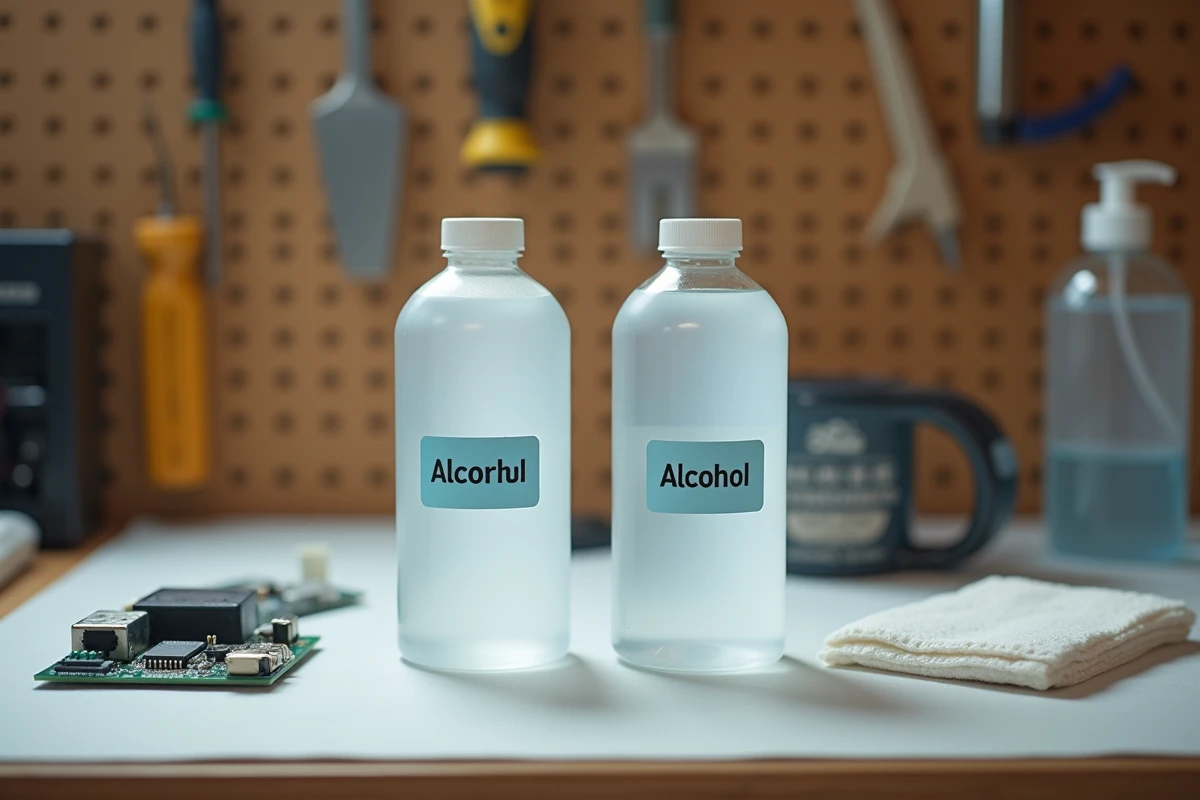
Isopropyl alcohol and disinfectant alcohol (denatured ethanol) are two products found in both pharmacies and supermarkets. Their chemical composition differs, and this difference has direct consequences on the type of equipment that can be cleaned safely. The choice between the two depends less on personal preference than on technical constraints related to the surfaces being treated.
Residues and evaporation: what happens on the surface after application
Most comparative guides focus on the germicidal power of each alcohol. The behavior of the product after application deserves equal attention. Isopropyl alcohol evaporates quickly and does not leave a visible film on smooth surfaces (glass, polished metal, electronic components).
Household alcohol, on the other hand, contains denaturing additives and sometimes fragrances. These additions can leave a slight sticky or odorous residue on certain materials. On a circuit board or connector, this residue is enough to cause a false contact or attract dust.
To better understand the question of isopropyl alcohol vs disinfectant alcohol, one must first identify what is being cleaned before choosing the product.
An alcohol that evaporates without residue better protects sensitive components than an additive-laden product, even if the latter has a comparable concentration.
Electronic and optical equipment: why isopropyl dominates
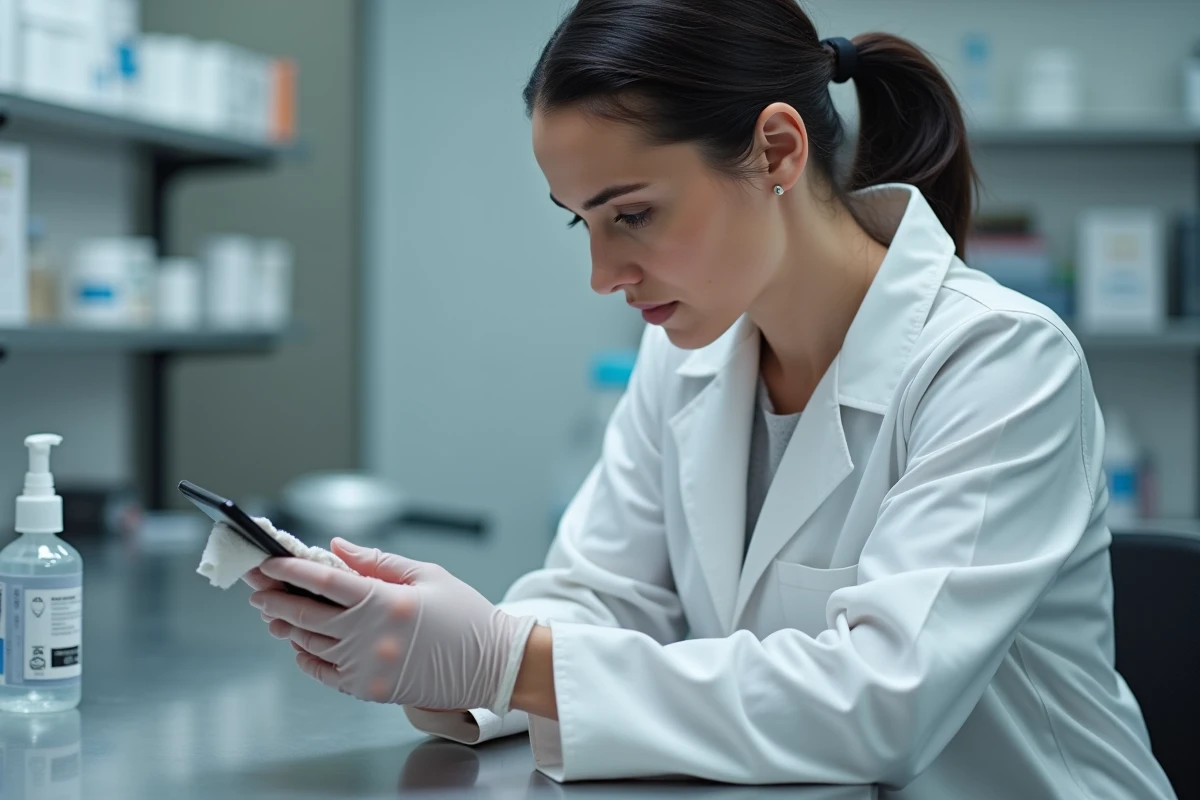
Computer repair technicians, photographers, and lab technicians almost exclusively use isopropyl alcohol for cleaning their tools. The reason lies in three combined properties:
- Rapid evaporation without residue, including on optical lenses and anti-reflective treated screens
- Absence of additives that could attack fine coatings or rubber seals
- Sufficient degreasing power to remove solder flux residues on electronic boards
Fragrant or additive-laden household alcohol has no place in these contexts. Even a “neutral” ethyl alcohol at the same concentration poses a risk of residue if its formulation includes aggressive denaturing agents.
Isopropyl is the only alcohol suitable for fragile electronic components. Field reports from repair technicians converge on this point.
Musical instruments and treated surfaces: the case where disinfectant alcohol wins
The reflex to use isopropyl everywhere leads to costly mistakes. Some manufacturers of metal musical instruments, particularly handpans and percussion instruments, strictly recommend 70° disinfectant alcohol for deep cleaning.
The goal is to degrease and disinfect without altering the patina or surface treatment. A more powerful solvent like high-concentration isopropyl risks stripping the protective layers applied by the manufacturer.
Laquered woodwork and painted PVC
Manufacturers of woodwork specify that using household alcohol or isopropanol on lacquered frames can void the warranty of the support. The paint film dulls, sometimes irreversibly. For these surfaces, neither alcohol is suitable. A neutral cleaner with controlled pH remains the only risk-free option.
This case illustrates a limit that alcohol comparisons rarely address: sometimes, the right answer is neither isopropyl nor disinfectant alcohol, but a product from another category.
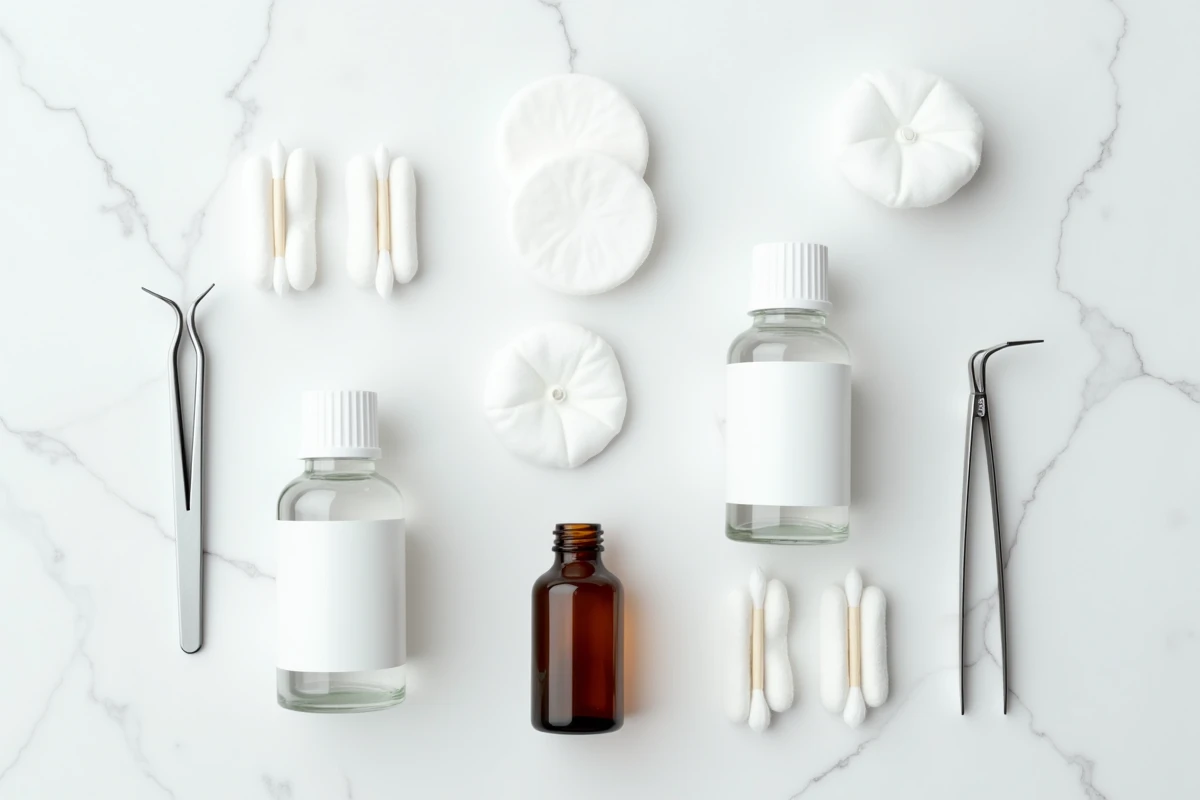
Beauty tools and small equipment on the go
In the field of aesthetics, isopropyl alcohol is recommended for cleaning brushes, tweezers, and manicure tools in mobile situations. It is readily available in pharmacies in most countries and evaporates without rinsing, making it more convenient than fragrant household alcohol.
Classic disinfectant alcohol also works, but its additives can leave a persistent odor on natural hair brushes. For daily use on small equipment, isopropyl offers a more neutral result.
Concentration and germicidal effectiveness: the 70% zone
A technical point often comes up in discussions: 70% isopropyl alcohol destroys more bacteria than 90%. The explanation lies in the role of water in the mixture. Water slows evaporation and allows the alcohol to remain in contact longer with microorganisms, promoting the denaturation of bacterial proteins.
At 90% or higher, evaporation is so rapid that the contact time becomes insufficient for certain pathogens. This logic also applies to ethyl alcohol. The optimal concentration for disinfection is therefore around 70%, regardless of the type of alcohol chosen.
The available data do not allow for a conclusion that one type of 70% alcohol is systematically superior to another in terms of pure germicidal power. The difference lies in residues, compatibility with surfaces, and the additives present in the formulation.
Summary table by type of equipment
| Type of equipment | Recommended alcohol | Main reason |
|---|---|---|
| Electronic components | Isopropyl (70%) | Evaporation without residue |
| Metal musical instruments | Disinfectant alcohol (70°) | Preserves patina and treatment |
| Beauty tools on the go | Isopropyl | No rinsing, no odor |
| Laquered woodwork, painted PVC | None of the two | Risk of dulling, loss of warranty |
| Glass surfaces exposed to heat | Specific neutral product | Strong solvents not recommended |
The choice between isopropyl alcohol and disinfectant alcohol depends on the equipment, not on the product itself. Successful cleaning starts with reading the manufacturer’s instructions for the item you wish to treat. When this instruction does not say anything, 70% isopropyl remains the safest choice for most technical surfaces.