The market for “unusual” travel has significantly expanded in recent years. What was once a niche – sleeping in a treehouse, crossing a desert independently – now concerns an increasing number of travelers. Agencies, booking platforms, and local tourist offices are multiplying offers labeled “off the beaten path.”
Behind this abundance, the logic of choice is transforming: the unusual destination is no longer defined solely by its geographical remoteness, but by the nature of the experience it offers and its relationship to the territory.
Micro-destinations and secondary cities: unusual travel changes scale
Classic lists of unusual destinations point to entire countries (Mongolia, Bolivia, Ethiopia). This approach by large territories is gradually giving way to a logic of micro-destinations. According to the QUE report published in September 2026, travelers are increasingly seeking small towns with a strong local identity, rural areas, and slower experiences.
This phenomenon is not anecdotal. It reflects a saturation of iconic places, even those that were still considered confidential a few years ago. A fishing village in Portugal, an agricultural valley in Umbria, a spa town in Auvergne: these destinations do not appear in any “top 10” rankings, and that is precisely what attracts.
For travelers looking to step outside the usual circuits, specialized platforms like 1001decouverte.com aggregate stays focused on these less exposed territories, where the tourist offer remains artisanal.
Field reports vary on this point: some micro-destinations see their visitor numbers increase rapidly as soon as they gain visibility on social media. The window of tranquility of a place can close in a single season. Choosing an unusual destination therefore requires active monitoring, beyond fixed recommendations.
Coolcation and seasonal shift: fresh destinations for unusual travel
Climate change is concretely altering the map of vacation destinations. Le Figaro, in its analysis “Big Bang of Figaro Voyage 2026,” identifies the growing appeal of destinations with cooler climates. The term “coolcation” refers to this trend: choosing a stay primarily for its mild temperatures, even in summer.
This logic reshapes flows. The Faroe Islands, the north coast of Scotland, inland Norway, and the high plateaus in France are becoming credible alternatives to Mediterranean stays in July-August. Seasonality itself is shifting: spring and autumn are concentrating an increasing share of departures, opening slots in regions that are usually ignored.
For a family, this shift can transform an ordinary stay into an unusual adventure. Hiking in the Vosges in October, exploring inland Brittany in May, or heading to the Highlands in September offers radically different discovery conditions than during peak season. The trails are deserted, accommodations are less sought after, and nature presents a face that most visitors never see.
Three criteria to identify a relevant fresh destination
- The average summer temperature remains below 25 °C, allowing for extended outdoor activities without heat constraints
- The local accommodation offer exists but remains limited in volume, indicating that the territory has not yet transitioned to mass tourism
- Accessibility by land transport from a regional hub (train station, secondary airport) is realistic in less than three hours, avoiding the paradox of “nature” travel requiring two flights
Regenerative tourism: when the stay contributes to the territory
Regenerative tourism goes beyond simply reducing environmental impact. According to QUE (September 2026), the experiences offered tend to include a concrete contribution to the visited territory: restoration of ecosystems, conservation led by local communities, preservation of artisanal or agricultural know-how.
This approach remains a minority in the commercial offer. Most stays labeled “eco-responsible” are limited to offsetting carbon emissions or eliminating single-use plastics. Regenerative goes further: the traveler actively participates in a local project during their stay.
Concrete examples are multiplying around the world. Planting mangroves in Southeast Asia, restoring dry stone walls in the Cévennes, participating in a biodiversity inventory on an Atlantic island: these hybrid formats between vacation and engagement appeal to a variety of profiles, including families with children.
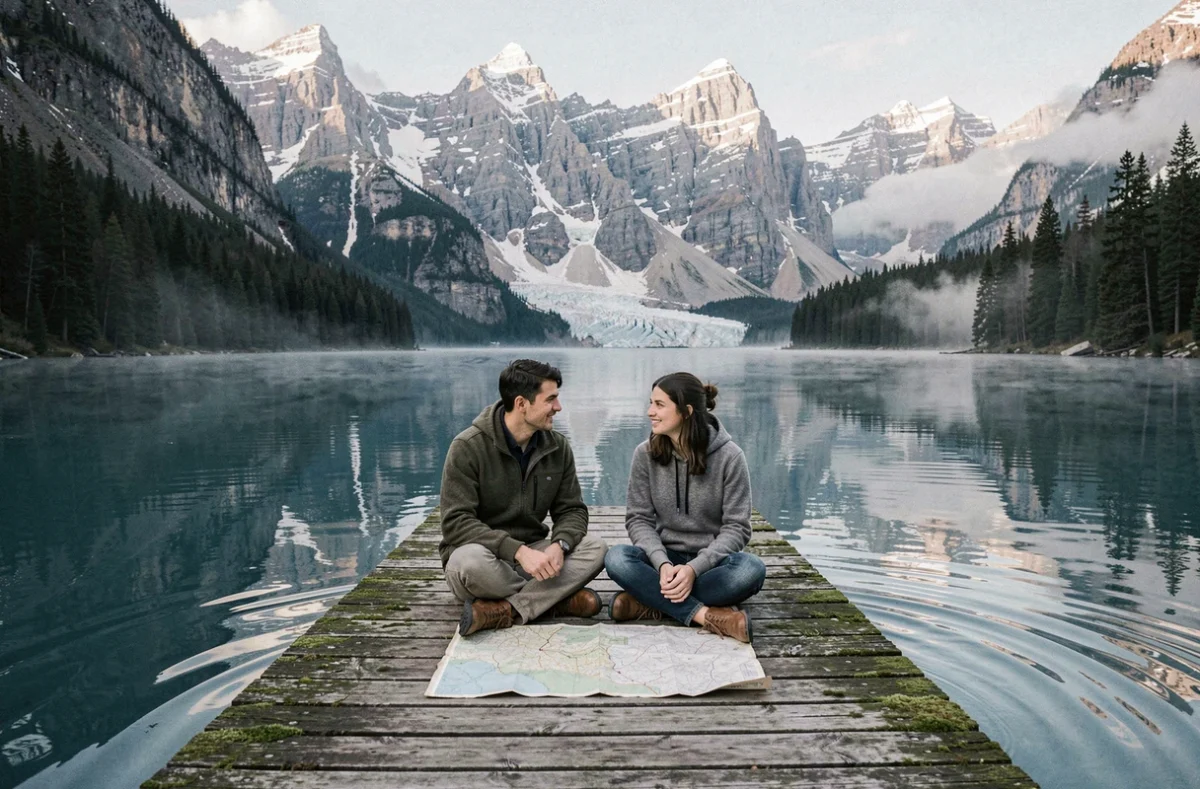
What regenerative changes in choosing a destination
The selection criterion is no longer “what will I see?” but “what will I contribute?”. This reversal changes the very nature of unusual travel. A stay in a village in the Cyclades where one participates in the rehabilitation of abandoned agricultural terraces is nothing like a classic tourist circuit in Greece, even if the geographical destination is the same.
The available data does not yet allow for measuring the real impact of these stays on the affected territories. The most structured initiatives are led by local communities that maintain control of the project, which limits the standardization effect that the tourism sector usually imposes.
Unusual destinations in France: underestimated territories
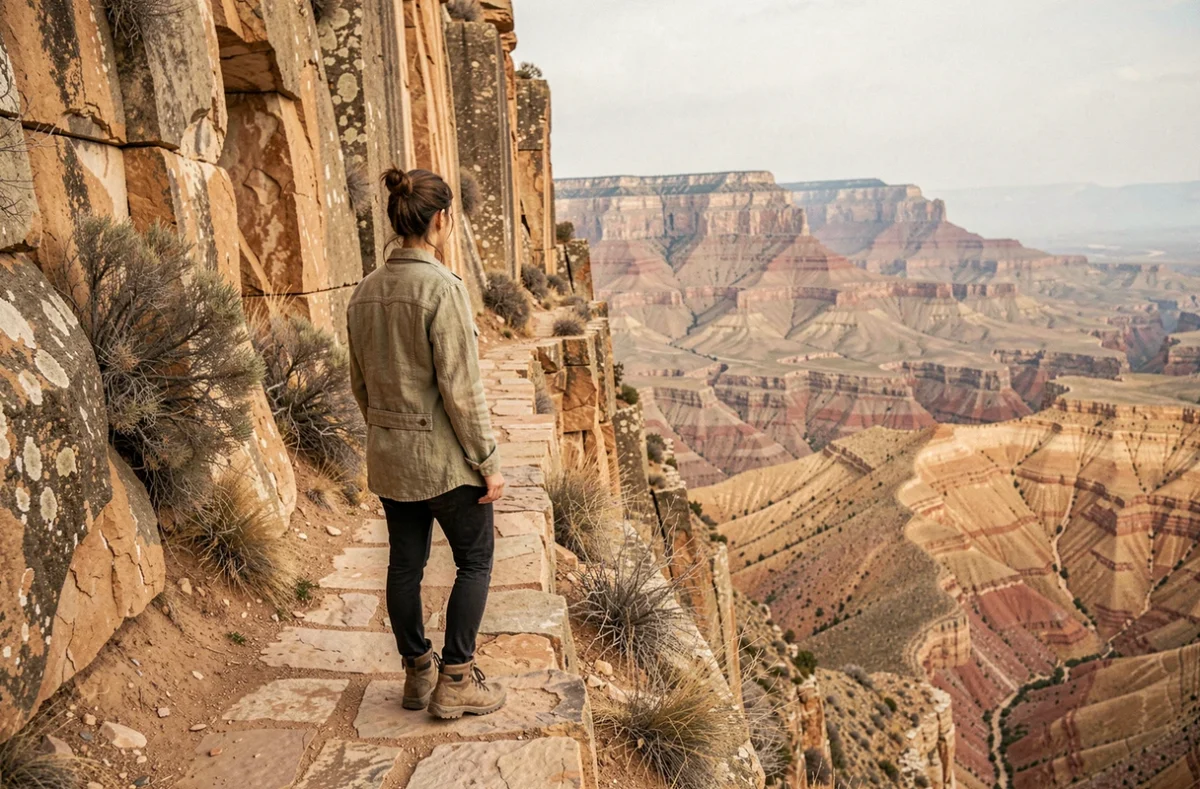
France remains paradoxically unknown to its own inhabitants across large portions of its territory. The causses of Quercy, the Millevaches plateau, Thiérache, the Arrée mountains, or the southern Vercors offer landscapes and atmospheres that many travelers spontaneously associate with distant countries.
A stay in France can rival the change of scenery of a trip abroad if the territory is chosen for its geological, cultural, or climatic uniqueness rather than for its notoriety. The Jonte gorges in Lozère house spectacular raptor fauna. The Poitevin marsh offers boating through a vegetal labyrinth. The volcanoes of Auvergne, in autumn, provide panoramas that most hikers never discover.
- The southern Vercors, with its high plateaus devoid of roads or villages, is one of the last spaces for pedestrian solitude in Western Europe
- The Crozon peninsula in Brittany concentrates cliffs, sea caves, and beaches accessible only on foot within a few kilometers
- The Bauges massif in Savoie, labeled a global geopark, combines geological heritage and active pastoralism in very little frequented valleys
The search for unusual destinations does not necessarily imply a significant budget or a long-haul flight. It mainly requires stepping outside the recommendation algorithms that mechanically direct towards the same places. The most unusual trip is sometimes the one you take three hours from home, in a territory that no one around you knows.